"There's no shortcuts with ultrasound."
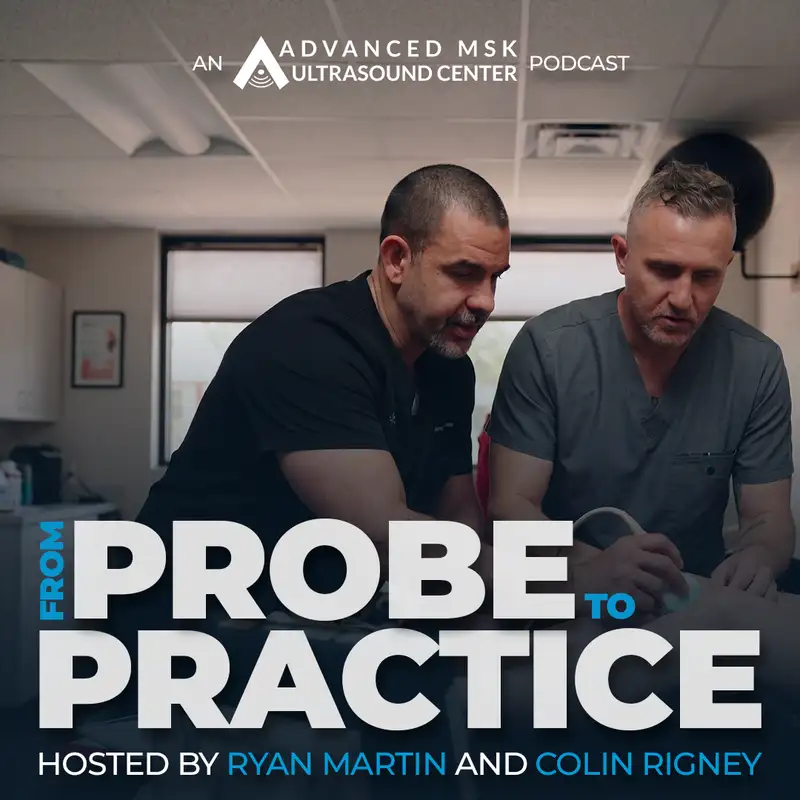
A weekend course can hand you momentum. It cannot hand you competence. Colin Rigney and Ryan Martin come off a weekend of teaching and take the question straight on: I did a weekend course, what are your thoughts?
The answer starts with intent. Where is your skill set right now, why are you adding this one, and what do you actually want to be able to do at the end of it? Two clinicians can sit at the same table for the same two days and walk away with completely different things, and the difference is almost never the course.
Then there is the objection underneath all of it. "I don't have time." Ryan's answer is that you have time, everybody has time, and what you are really describing is a priority. That answer tells you more about the intent than any registration form does.
Also in this episode: the physician assistant who is genuinely proficient at ultrasound-guided hip injections and does everything else blind; why people try to learn a new skill through the lens of how they learned the last one, and why that turns into resistance; how industry money shapes what gets taught in a big conference room, and how to find the trusted sources when you cannot tell hype from evidence; why ultrasound is the gateway to regenerative medicine and the only imaging tool that lets you assess, discuss and treat in the same visit; and what AMSKU built its own weekend immersion to do differently, with five learners, one instructor for every one to two attendees, no slide decks, and chalk talk straight to scanning.
To be clear, because the hosts are: good weekend courses exist and both of them teach at them. A weekend is a launchpad. The reps after it are the actual work.
The Monday-morning takeaway: before you book the next course, write down what you want to be able to do when it ends. If you cannot name that, another weekend will not get you there. If you can, you have just turned a course into a starting point.
In this episode:
0:00 — No shortcuts, and everybody has time
0:24 — Welcome to episode five
0:45 — Teaching the AANA workshop in Phoenix
3:30 — Ultrasound as a bolt-on to an existing practice
4:08 — Guardrails, and raising the standard
4:35 — There are no shortcuts with ultrasound
5:04 — Not one, two, or even three weekend courses
5:20 — A launchpad, or dipping your toe in
6:18 — Operator dependent, every time
6:50 — Today's question: I did a weekend course
6:59 — It all comes down to intent
7:45 — Start with the end in mind
9:00 — The elbow injection nobody had shown him
9:43 — Meet people where they are
10:10 — Proficient at the hip, blind everywhere else
11:43 — What is the real intent for going?
12:57 — Industry, money, and influence in the room
14:07 — Shiny objects, and the charlatan problem
15:13 — Finding the trusted sources
16:42 — The objections to starting MSK ultrasound
17:10 — Learning a new skill through an old lens
19:51 — Time, money, and what you actually prioritize
21:29 — Everybody has time
22:41 — The person who goes to the gym
23:35 — Ultrasound is the gateway to regenerative medicine
24:26 — Inside the AMSKU immersion: five learners
26:10 — Weekend courses are a launchpad
27:05 — The anti-weekend course
28:46 — Good weekend courses do exist
30:35 — No slide decks, chalkboard to practice
33:46 — Where to start: select.amsku.com
35:03 — The Diagnostic Awakening
35:56 — Sign-off
0:00 — No shortcuts, and everybody has time
0:24 — Welcome to episode five
0:45 — Teaching the AANA workshop in Phoenix
3:30 — Ultrasound as a bolt-on to an existing practice
4:08 — Guardrails, and raising the standard
4:35 — There are no shortcuts with ultrasound
5:04 — Not one, two, or even three weekend courses
5:20 — A launchpad, or dipping your toe in
6:18 — Operator dependent, every time
6:50 — Today's question: I did a weekend course
6:59 — It all comes down to intent
7:45 — Start with the end in mind
9:00 — The elbow injection nobody had shown him
9:43 — Meet people where they are
10:10 — Proficient at the hip, blind everywhere else
11:43 — What is the real intent for going?
12:57 — Industry, money, and influence in the room
14:07 — Shiny objects, and the charlatan problem
15:13 — Finding the trusted sources
16:42 — The objections to starting MSK ultrasound
17:10 — Learning a new skill through an old lens
19:51 — Time, money, and what you actually prioritize
21:29 — Everybody has time
22:41 — The person who goes to the gym
23:35 — Ultrasound is the gateway to regenerative medicine
24:26 — Inside the AMSKU immersion: five learners
26:10 — Weekend courses are a launchpad
27:05 — The anti-weekend course
28:46 — Good weekend courses do exist
30:35 — No slide decks, chalkboard to practice
33:46 — Where to start: select.amsku.com
35:03 — The Diagnostic Awakening
35:56 — Sign-off
Mentioned in this episode:
AMSKU Select, the weekend immersion both hosts describe as the anti-weekend course — five learners, one instructor for every one to two attendees, 13 hours of guided scanning, in Mesa, Arizona: https://select.amsku.com
Introduction to Musculoskeletal Ultrasound — the online course to start with if time or bandwidth is the real constraint right now: https://www.amsku.com/courses/introduction-to-musculoskeletal-ultrasound/
The Diagnostic Awakening — Colin and Ryan on how they got here, and what integration actually took: https://awakening.amsku.com
Introduction to Musculoskeletal Ultrasound — the online course to start with if time or bandwidth is the real constraint right now: https://www.amsku.com/courses/introduction-to-musculoskeletal-ultrasound/
The Diagnostic Awakening — Colin and Ryan on how they got here, and what integration actually took: https://awakening.amsku.com
New episodes every Tuesday.
From Probe to Practice is brought to you by the Advanced MSK Ultrasound Center — courses, residency and live workshops: https://amsku.com